When you need this
Any time you parge a foundation, lay block, stucco a wall, or pour concrete next to a patio, some of it ends up on the pavers. Mortar, concrete, grout, stucco, parging, and surface bonding cement are all cement-based, so they all come off the same way.
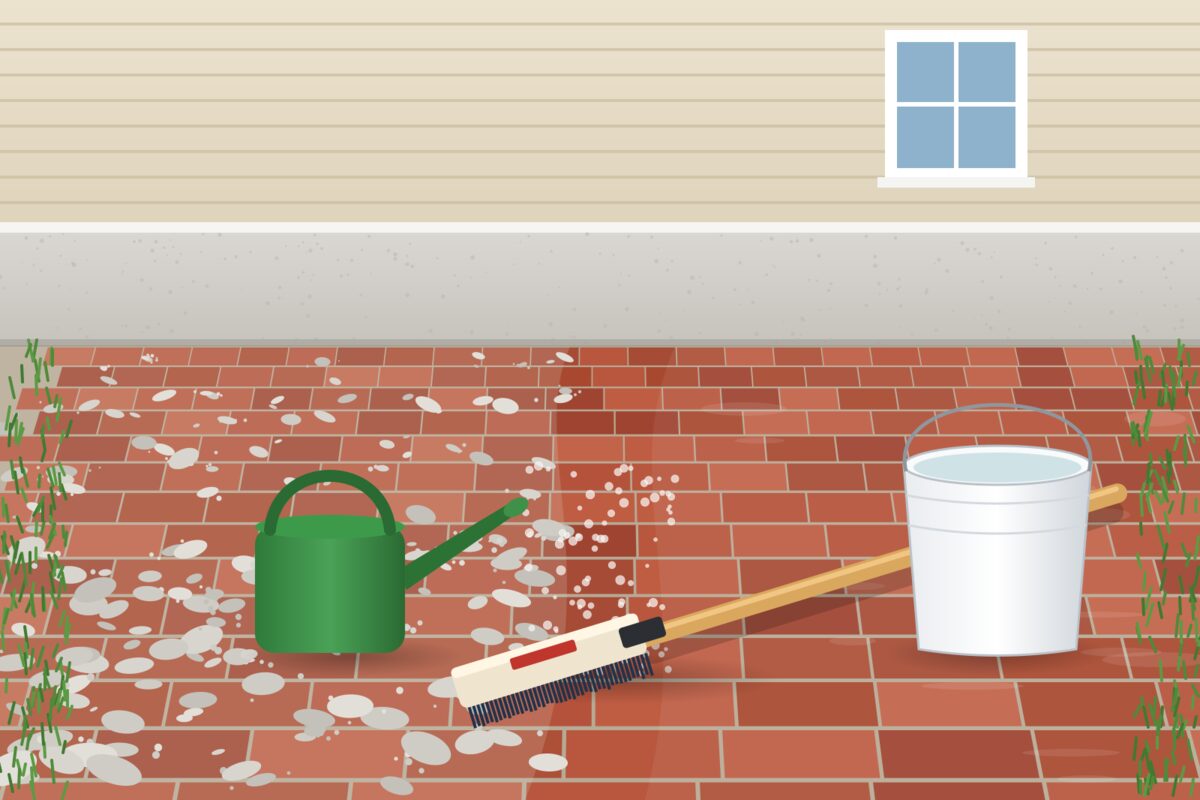
We wrote this guide after one of our own jobs. We were parging a foundation wall with surface bonding cement and splattered the brick patio below it. The cleanup is not hard, but the order of the steps matters. Most of the damage people do to a patio while cleaning it comes from skipping one step: soaking the brick before the acid goes on.
Check these first
- How old is the splatter? Material that's still soft, usually under 24 hours old, comes off with a plastic scraper, water, and a stiff brush. No acid needed. Clean it now while it's easy.
- Clay brick or concrete pavers? Clay brick is fired, and the color goes all the way through. Concrete pavers are cast, and many have only a thin colored surface layer. This guide's acid method is for clay brick. Acid etches concrete pavers and fades their color, so for those, use a non-acid concrete dissolver labeled safe for pavers and follow its label.
- What are the joints? Acid weakens mortar joints if it sits on them, and high-pressure rinsing blasts polymeric sand out of its joints. Work spot by spot either way.
- Is the surface sealed? Acid can strip or cloud sealer. Plan to reseal after cleaning.
- Natural stone? Limestone, travertine, and marble dissolve in acid. Never use it on them. Scrape, and use a stone-safe cleaner only.
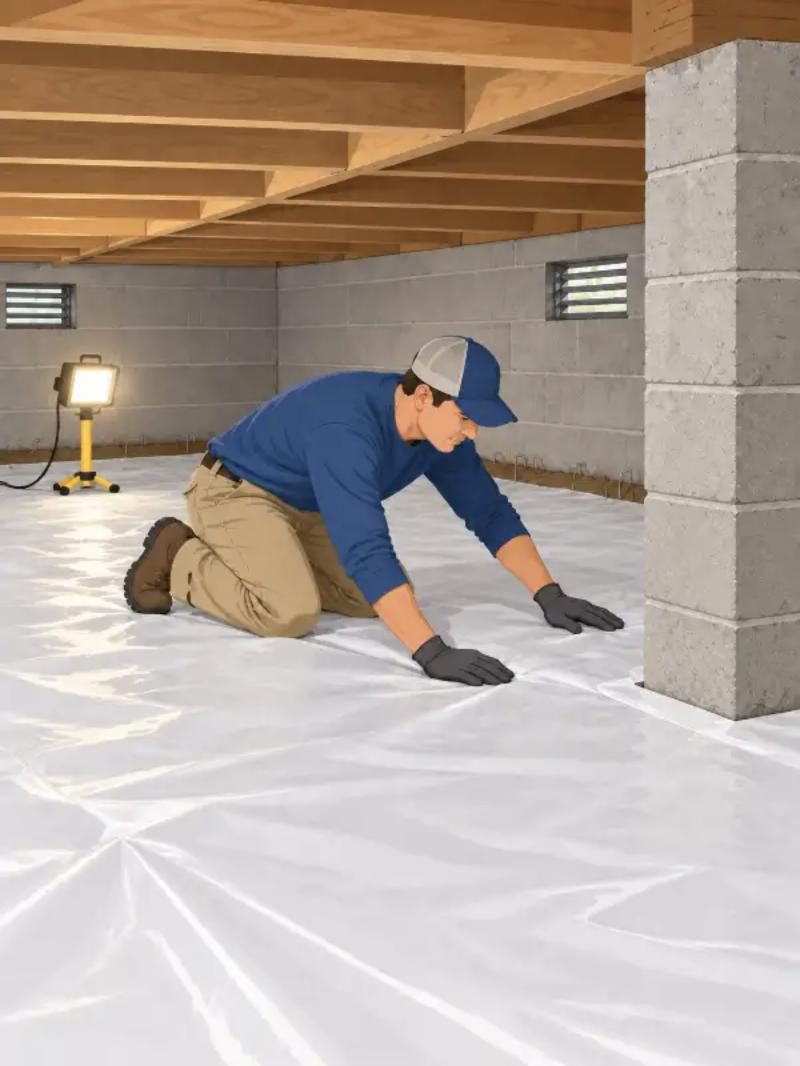
- Is the wall work finished? Finish every coat on the wall first, including any skim or finish coat, and let it cure a few days before you clean the patio. Acid residue on a base coat can weaken the next coat's bond, and more wall work will just splatter the pavers again. Cover the patio with plastic sheeting while you finish the wall.
Pick the right day
Work on a dry day between 40°F and 85°F, and stay out of direct afternoon sun. Heat dries the acid on the brick before you can rinse it, and acid that dries on the surface is what leaves stains.
Step by step
Work in sections of about 10 square feet. Finish each section completely, from wetting through rinsing, before you move to the next one.
Scrape off the thick splatter. Hold a plastic scraper or masonry chisel nearly flat and pop each blob loose at its edge. Don't strike straight down into the brick. Acid only dissolves a thin film, so get off as much as you can by hand first.
Mix the neutralizer. Fill a bucket with water and stir in about 1 cup of baking soda per gallon. Pour it into the pump sprayer and set it aside. Use the pump sprayer for this rinse only; most have metal parts and seals that acid eats.
Soak the brick. Hose down the first section until the brick stops absorbing water. Wet brick keeps the acid at the surface. Dry brick soaks it in, and that is what causes burn marks and white haze.
Mix the acid. Pour about 4 gallons of water into the second bucket, then slowly add the acid. Use the label's ratio for removing mortar from brick. If the label doesn't give one, use 1 part acid to 10 parts water, and don't go stronger. Always add acid to water, never water to acid.
Apply it with a watering can. Fill a plastic watering can from the acid bucket and sprinkle the mix over the wet section. A watering can gives you control and keeps splashing to a minimum. It should fizz where it hits the cement. Let it work for 3 to 5 minutes, and don't let it dry.
Scrub. Scrub firmly with the deck brush while it's still fizzing.
Rinse. Flush the section with plenty of hose water, and rinse the brush head too so the acid doesn't corrode its metal connector. Then move to the next section and repeat steps 3 through 7.
Neutralize. When the whole patio is done, spray it all with the baking soda rinse. Wait a few minutes, then give it a final rinse with the hose.
Check it dry. Some haze shows up only after the patio dries. Go over remaining spots one more time at the same strength. A stronger mix is what causes burns, so don't make it stronger.
Protect the wall and the yard
The same acid that dissolves splatter on the patio will etch fresh parging, stucco, or concrete on the wall.
- Clean the strip of pavers along the wall last, with less mix and a small hand brush, or just the corner of the deck brush.
- Scrub away from the wall, never toward it.
- Keep the hose ready and rinse any splash on the wall immediately.
- Rinse off any acid that reaches siding, trim, downspouts, glass, or metal flashing right away.
- Soak nearby plants, lawn edges, and mulch beds before you start and again when you finish, so any runoff is diluted.
Troubleshooting
| What you see | Likely cause | What to do |
|---|---|---|
| Gray or white film after drying | Thin cement residue left behind | One more pass at the same strength, then rinse well |
| White powder that keeps coming back | Efflorescence: salts that water carries up through the brick | Dry-brush it off. It usually fades within a season. |
| Light, blotchy, or rough spots | Acid burn from a strong mix, dry brick, or acid left to dry | Can't be undone. Dilute further, and use a color-enhancing sealer to even out the look. |
| Green or brown stains on red brick | Acid reacting with metals in the brick | Use a brick stain remover made for those stains. Don't add more acid. |
| Blobs that won't dissolve | Too thick for acid to reach | Chip them down by hand, then clean the thin film that's left |
| Joints washed out | Pressure too high, or acid sat on the joints | Refill with polymeric sand or repoint the mortar |
Prevent it next time
Before you parge, stucco, or pour near a patio, lay plastic sheeting and tape it at the base of the wall. Keep a bucket of water and a brush nearby, and wipe drips while they're still wet. Five minutes of prep saves an afternoon of acid work.
When to call a pro
Bring someone in if the patio is concrete pavers, natural stone, or sealed and you don't want to risk the finish, if the splatter covers a large area, or if the joints are already loose. We handle foundation parging, masonry repairs, and the cleanup that comes with them, and we can usually take care of it alongside the rest of a repair list.